Pallets, pipes, crates, a yellow gym ball, a toy car on a slide and a trampoline. Every team builds one section, every section has to trigger the next, and at the end the whole company stands around a single machine that either runs from start to finish or does not. Chain Reaction is the team building programme where nobody wins unless everybody does.
Throughout the Netherlands, indoors or outdoors

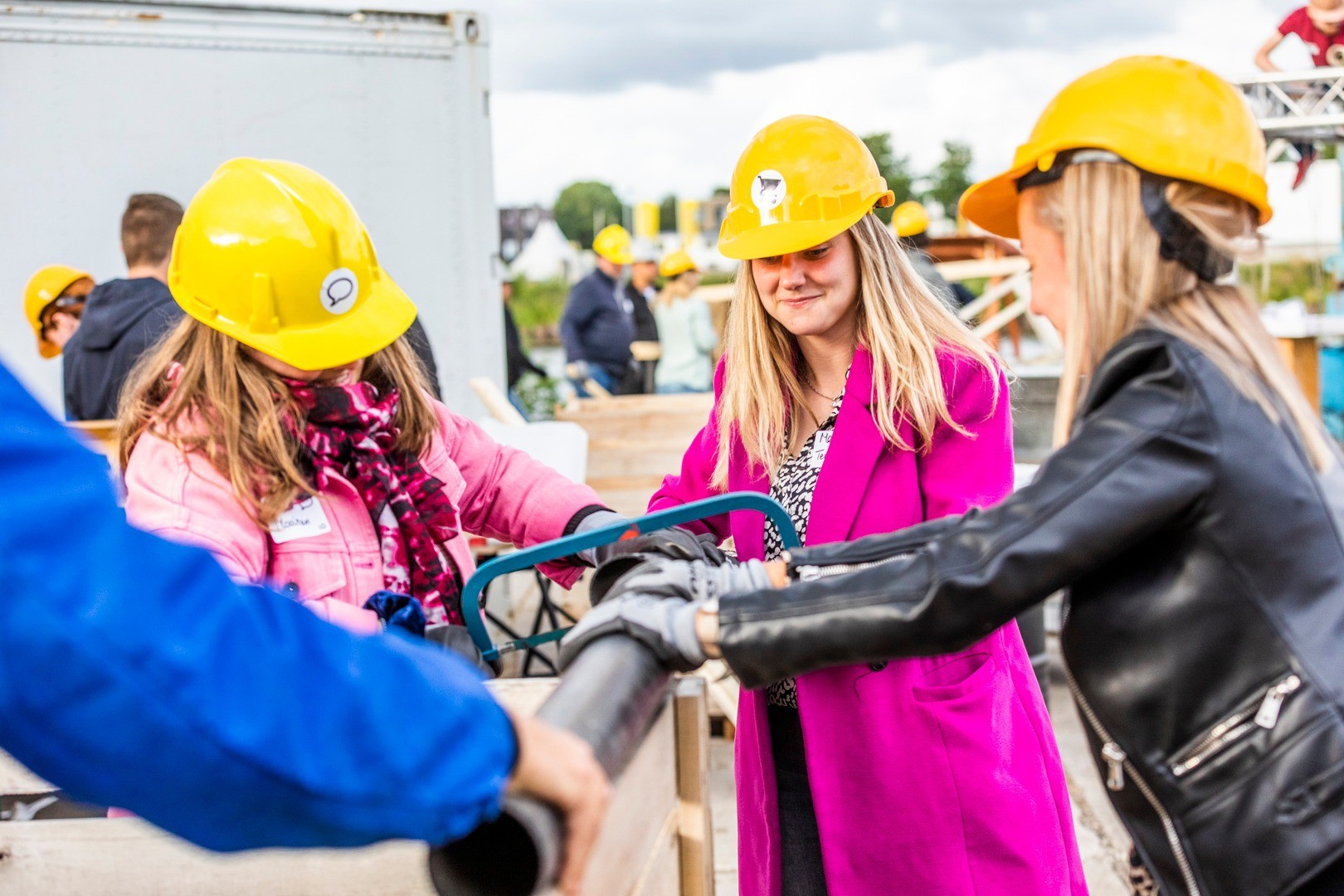
Colleagues fit a pipe into the chain
The idea
Most team building is a contest. Chain Reaction is deliberately not. The group is split into teams, each team gets a stretch of floor, a crate of materials and a yellow helmet, and one assignment: build a section of the machine that is set in motion by the team before you and that sets the next team in motion. Nothing you build counts on its own. The programme description we have used since the start says it plainly: every participant plays a crucial role in achieving the end goal, from the CEO to the receptionist, from the technical team to the policy advisors.
The materials are what a Dutch barn would hold: wooden pallets and crates, drainpipes and gutters, rope, gym balls, buckets, a sled, a wheelbarrow, a kids' pedal car and a slide. We work with sustainable, reusable products. Teams get a few tools and a lot of time to argue, test, fail and test again. The engineers in the room discover that the trigger they designed needs the marketing team's balloon to work.
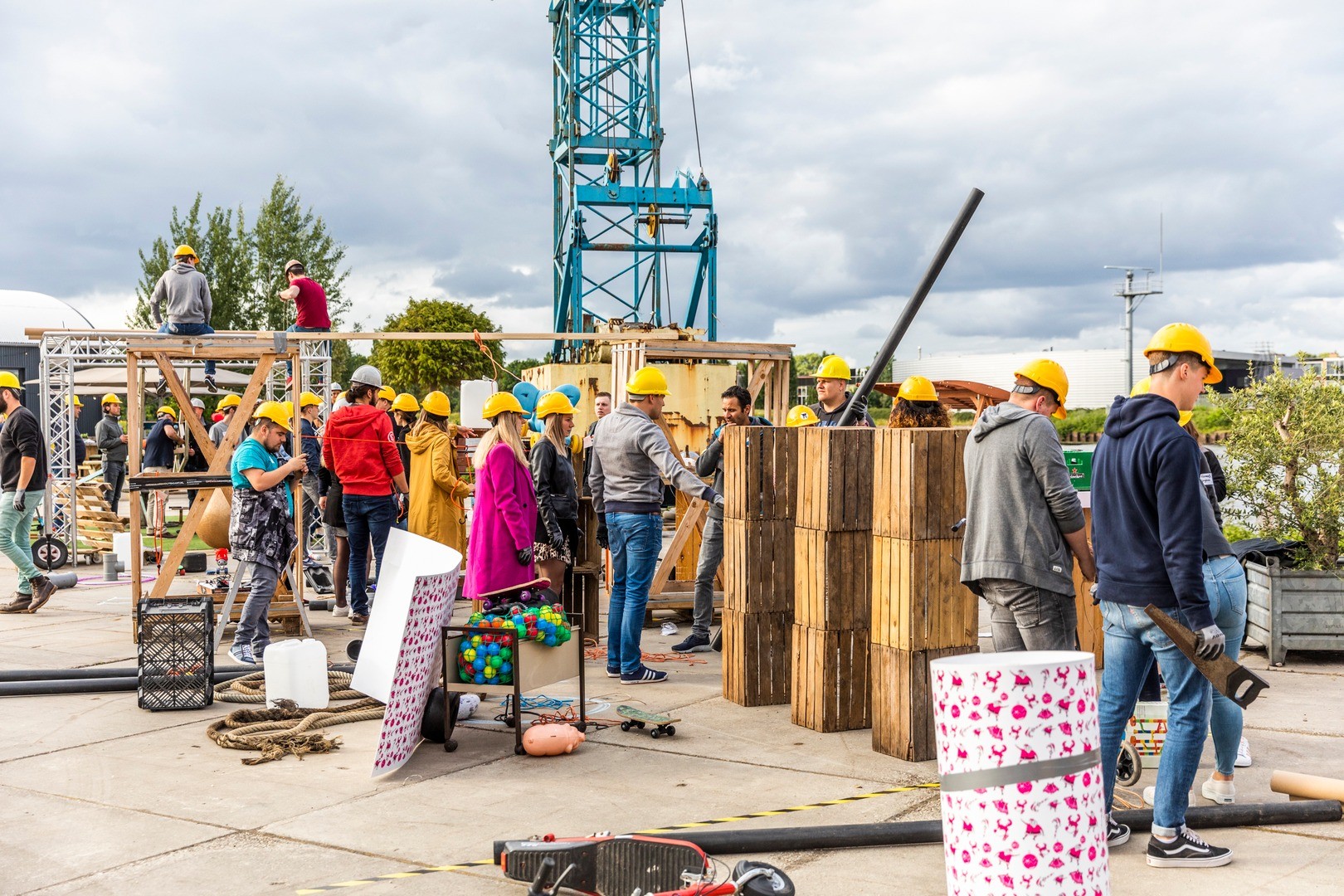
Teams in yellow helmets build their section of the Chain Reaction
The finale
After the build comes the moment the whole afternoon is for. Everyone gathers along the course. The host starts the first section. A ball rolls, a plank tips, a pipe delivers a marble into a bucket that pulls a string that releases the next ball. In the photo from one indoor edition the toy car waits at the bottom of a wooden ramp while two hundred colleagues hold their breath along the yellow tape. When a section fails, its team repairs it under the eyes of the whole company and the run restarts. The cheer at the end is for the machine, not for a winner.

Everyone watches the final run of the Chain Reaction
Who it is for
Companies that want to show cooperation across departments instead of competition between them.
Large groups: the format scales from 50 to 2,000 because every extra team is simply an extra section.
Mixed groups: the tasks range from heavy carpentry to fine adjustment, so people with very different bodies and skills all have a role. A current request for 450 people including 70 children shows it also works as a family day.
Any venue: we have built indoors in an industrial hall and outdoors on a quay with a crane as backdrop. A flat floor and about four square metres per person is enough.
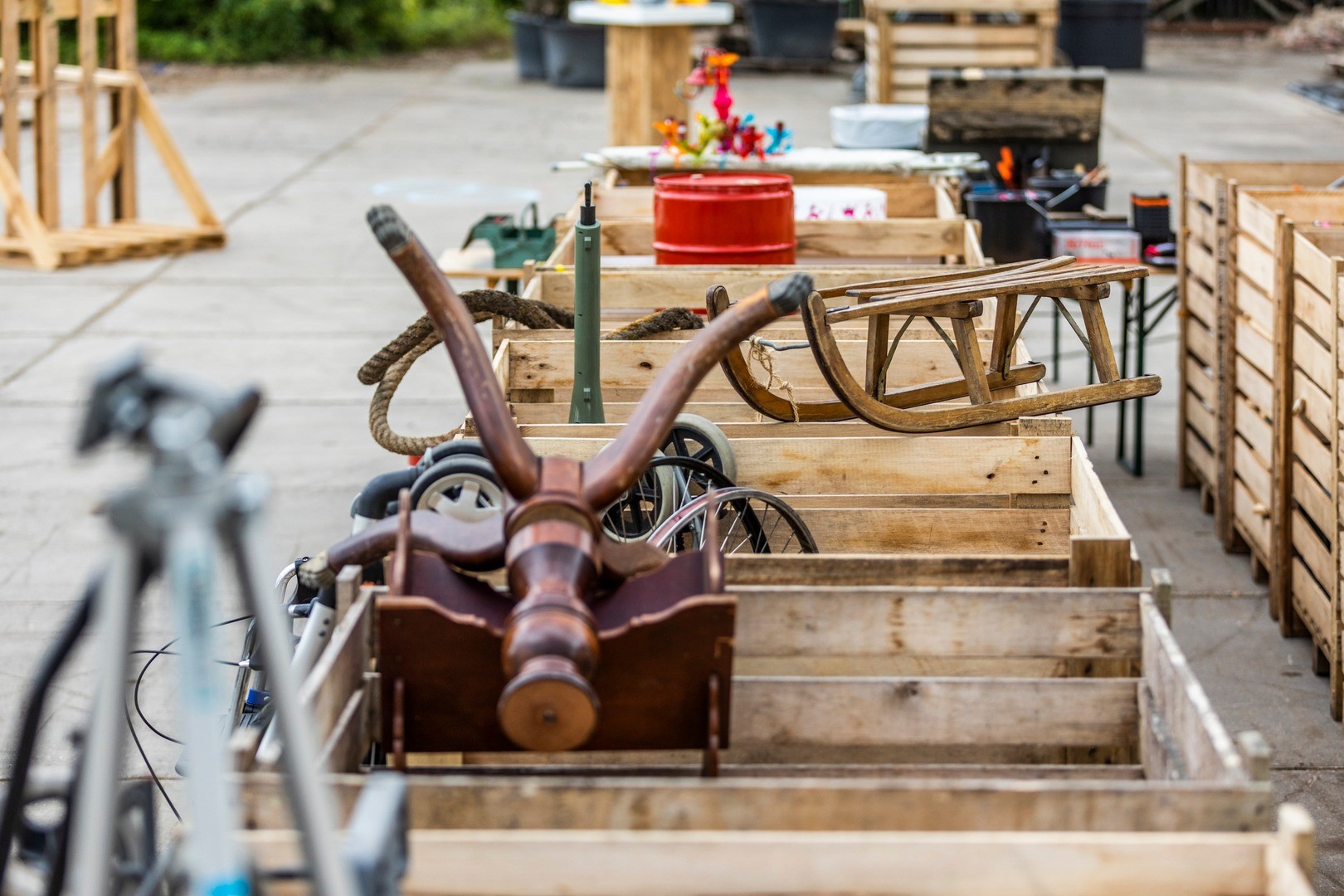
Crates with materials for the Chain Reaction
A short history of the idea
The absurd contraption that performs a simple task through a long chain of events is named after the American cartoonist Rube Goldberg, who drew them from the 1910s onwards; in the Netherlands the genre became television through the domino shows of the late 1990s and 2000s. Chain Reaction borrows the format but changes the point: it is not about the most ingenious machine but about the handover between teams. That is also why we never give a prize for the best section.
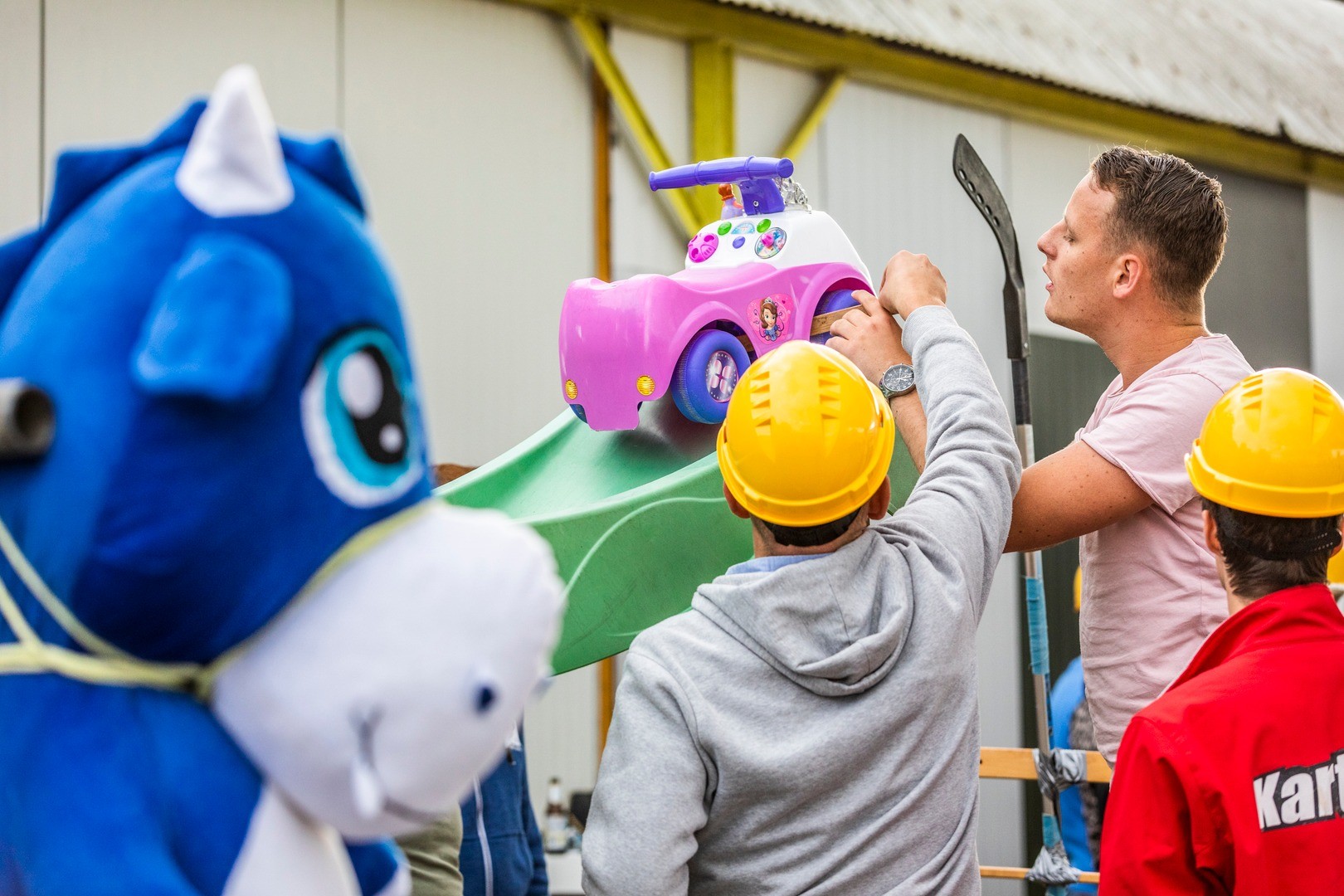
Building a section with a slide and a toy car
Practical
Group size: 50 to 2,000 participants, in teams of 8 to 12.
Duration: two to three hours, of which about 90 minutes building and 30 minutes for the runs.
Languages: Dutch and English. Executable throughout the Netherlands.
Branding: sections can be themed around the company's products, values or anniversary; the final trigger can reveal a message or a logo.
Sources
ENDLESS EXPERIENCES brochure, page Chainreaction (programme description, group size, materials).
Photo archive of Endless Minds, Chain Reaction editions indoors and outdoors.
Endless Minds event records on the Trello board EVENTS ENDLESS MINDS (request for 450 participants, July 2027).
General reference: the Rube Goldberg machine and the Dutch domino television shows.
From the Chain Reaction programme description
Want to experience this with your own team?
Tell us the occasion and the number of guests, or call us on +31 6 42 60 21 03. We will tell you honestly whether we are the right partner, and what it would take.