IJburg is a new part of Amsterdam, built on artificial islands in the IJmeer. From its harbour a group can sail out for a relaxed day on a large ship, or split into four teams and race.
IJburg, Amsterdam

A new harbour on an old lake
IJburg stands on artificial islands raised in the IJmeer. The first phase has six of them: Steigereiland, Haveneiland West and East, and the three Rieteilanden. The idea of a town in the IJmeer is much older: in 1965 the architects Jo van den Broek and Jacob Bakema drew the Pampus Plan, a town for 350,000 people. That plan was never built, but the municipality approved the smaller IJburg in 1996. In a referendum on 19 March 1997 about 133,000 votes were cast against it, short of the 155,000 needed, so construction went ahead.
The fort on the sandbank
Further out in the IJmeer lies Pampus, an artificial island with a sea fort. Work began in 1887 and the fort was commissioned in 1895, as part of the Defence Line of Amsterdam, to protect the entrance of the IJ bay and the harbour. It never saw action. The closing of the Afsluitdijk in 1932 ended its strategic role, and the army left on 15 July 1933. The fort was partially restored in 2007 and is open to visitors from April to October, with ferries from Muiden and from Amsterdam.
Boats with a past
The sailing ships of the Zuiderzee were flat-bottomed barges with a shallow draught, built to carry cargo over sheltered water. A typical one has a gaff rig, a blunt bow and stern, a pair of leeboards that replace a keel and a large rudder. A klipper has a clipper bow and a counter stern, a tjalk is heavier with an upright stem, and a botter is blunt-nosed. Many have been converted to motor power, but sailing races are still held on the IJsselmeer, and a good number of steel barges are a hundred years old or more.

Guests on the deck of a large sailing ship
Three ways to spend the day
In our programme everything starts from IJburg, and the format depends on the group. The first is a relaxed five-hour sail together on a large salon ship, with optional add-ons such as live music, a guide or team-building elements.
The second is a regatta with four teams. It opens with a keynote ashore, followed by practice rounds, two races and lunch on the water.
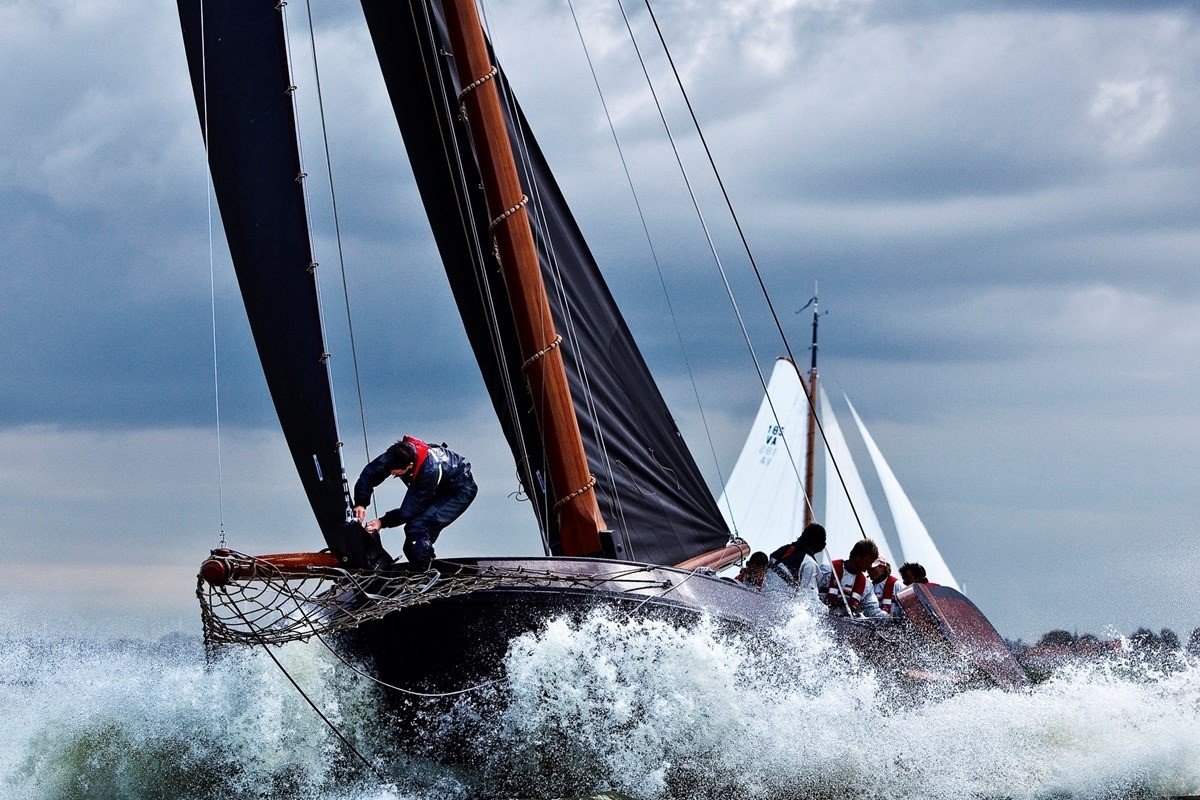
A racing sailboat heeling in a strong breeze
The third combines both: a historic steamship as the base, where guests alternate between racing and relaxing on board, with lunch and a guided tour.
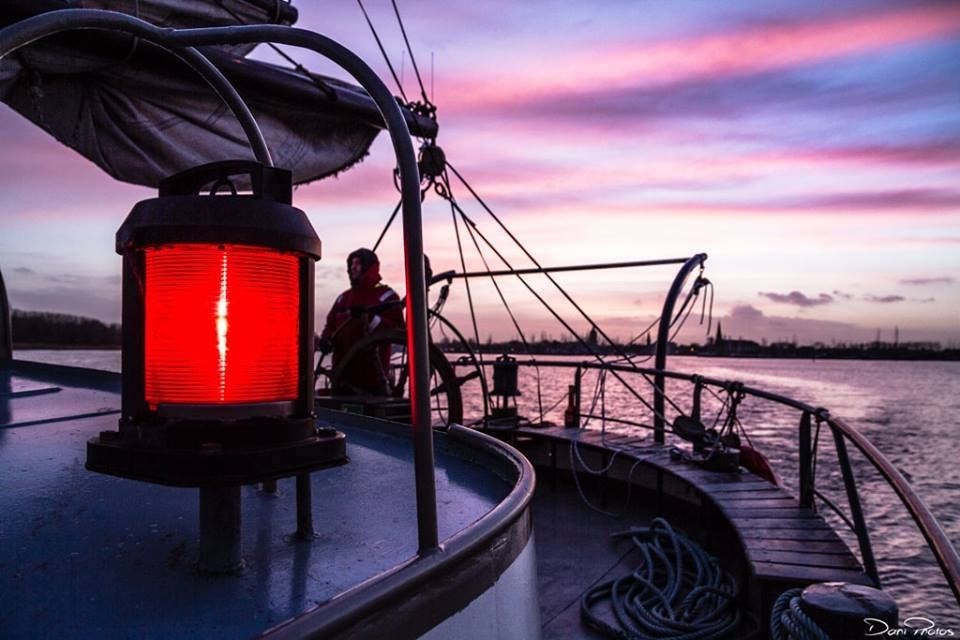
A ship's lantern at dusk over the water
Practical
Start: the harbour at IJburg, Amsterdam.
Formats: a five-hour sail on a large salon ship, a four-team regatta, or a day on a historic steamship.
Add-ons: live music, a guide or team-building elements on the relaxed sail, and lunch on the water for the regatta and the steamship day.
Weather: wind and weather decide how the day runs, so we plan it with some flexibility.
Sources
Wikipedia, IJburg: the islands, the Pampus Plan of 1965, the municipal approval of 1996 and the referendum of 19 March 1997.
Wikipedia, Pampus: construction from 1887, commissioning in 1895, the end of its military role and the visitor information.
Wikipedia, Dutch barge: the types, the rig and the leeboards, and the sailing races that are still held.
Endless Minds programme description: Dutch Sailing Experience.
From our programme description: Dutch Sailing Experience
Want to experience this with your own team?
Tell us the occasion and the number of guests, or call us on +31 6 42 60 21 03. We will tell you honestly whether we are the right partner, and what it would take.